
How long does it take?
Commonly 3–5 weeks door to port, combining the truck leg and a weekly sailing. The route covers about 2,700 road miles to the West Coast, then ~2,550 ocean miles to Honolulu.

Car Shipping Miami is a marketplace. Independent providers quote and perform the transport.
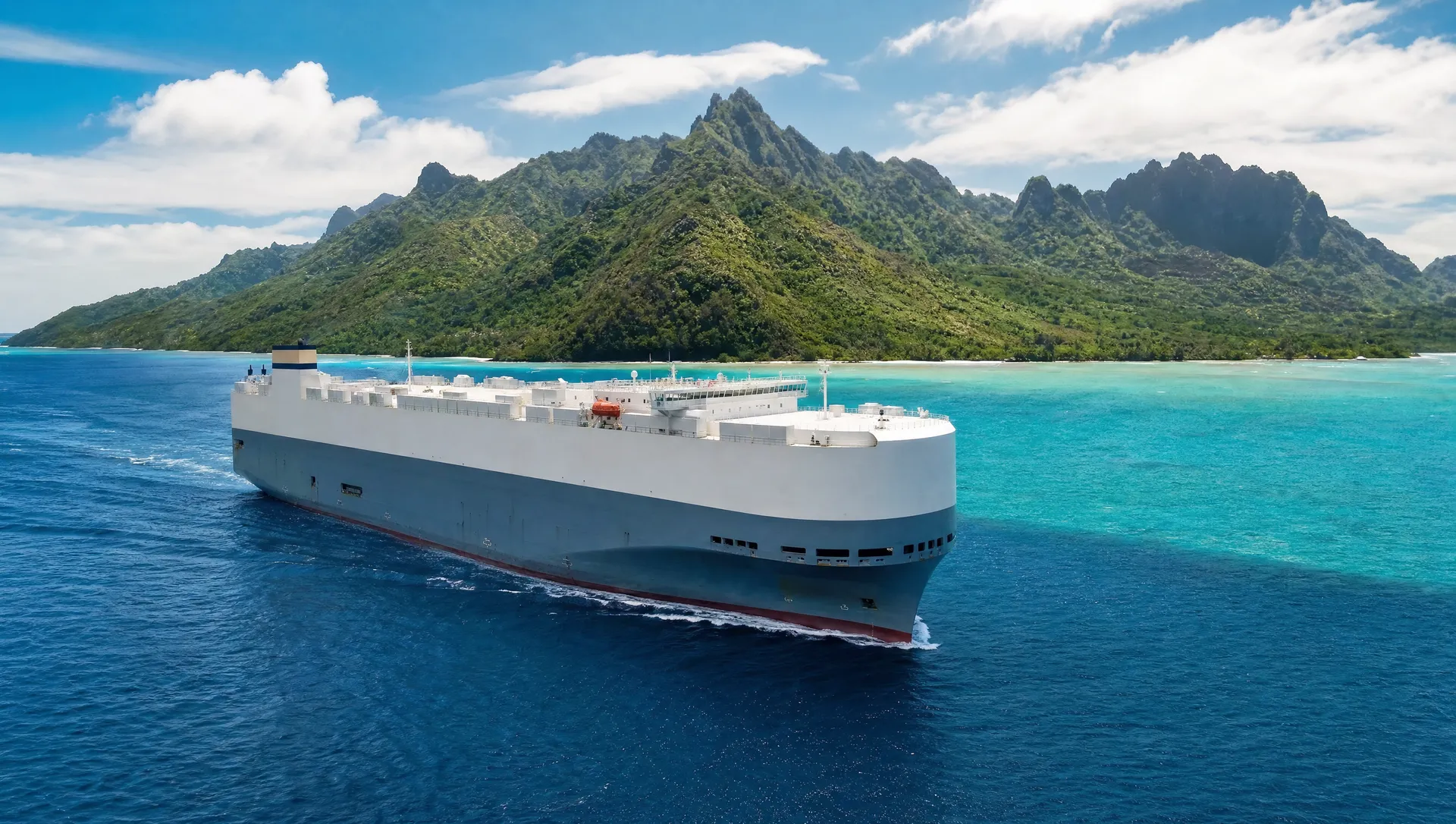
Published estimates for shipping a car from Miami to Hawaii ranged $1,700–$3,800 (standard sedan, Florida door to Honolulu unless noted), and transit is commonly 3–5 weeks door to port, combining the truck leg and a weekly sailing.
Know this first: There is no direct Florida sailing — the car trucks to a West Coast port and sails from there, so the schedule is planned backward from a target vessel.
Commonly 3–5 weeks door to port, combining the truck leg and a weekly sailing. The route covers about 2,700 road miles to the West Coast, then ~2,550 ocean miles to Honolulu.
I-10 to a Southern California port (Long Beach is typical), then a scheduled ocean service to Honolulu.
Sailings run on weekly schedules year-round. The truck leg carries normal cross-country seasonality; missing a sailing adds a week, which is why the overall window is quoted generously.
Published third-party estimates ranged $1,700–$3,800 (standard sedan, Florida door to Honolulu unless noted, collected August 2026). Two legs, two costs: a cross-country truck to the West Coast plus the ocean crossing, quoted together by providers who run the lane. Vehicle size drives the ocean portion — carriers price by the space the car occupies on the vessel.
Published estimates collected · standard sedan, Florida door to Honolulu unless noted
Published estimates
$1,700–$3,800
$1,700–$2,900
as published by A-1 Auto Transport (opens in a new tab)
Florida to Hawaii flat-rate estimate, mainland pickup plus RoRo to Honolulu, 12–21 days
$2,500–$3,800
as published by AmeriFreight (opens in a new tab)
Florida to Hawaii, open mainland leg plus standard ocean service, door-to-port, 20–29 days
from $1,790
as published by Matson (opens in a new tab)
West Coast port to Honolulu, ocean freight only (published base rate); neighbor islands from $2,600
$2,500–$3,200
as published by Hawaii-Guide.com (opens in a new tab)
sedan from an East Coast origin including the overland leg; SUVs and trucks $2,800–$3,600
There is no Florida sailing — cars travel overland to a West Coast port and then ship to Hawaii, so the ocean tariff is only part of the total.
These figures are estimates published by third-party transport companies, shown here for orientation with their sources and collection date. They are not quotes from Car Shipping Miami or from providers on this marketplace, and they are not binding on anyone. Independent providers set their own pricing for your specific shipment.
Sourced data
Every figure below names its source — the standard the whole site holds itself to.
~2,550 nm
ocean miles from Los Angeles to Honolulu
Source: Ocean carrier route data
Weekly
mainland–Hawaii vehicle sailings run on fixed weekly schedules
Miss the cutoff and the car waits a week — the fact the whole timeline is built around.
Source: Matson / Pasha published schedules
1/4 tank
maximum fuel allowed at port check-in
Plus clean inside and out, no personal items, and agriculture inspection on arrival.
Source: Ocean carrier vehicle acceptance rules

Both endpoints, the vehicle, whether it runs, and your timing — an island move starts the same way a driven one does.

Ask whether the figure is port-to-port or door-to-port, then book against the sailing’s drop-off cutoff.

Deliver the car nearly empty with the title and ID, then collect it at the island port once arrival fees are settled.
How this route behaves
The truck leg works like any cross-country move; the port handoff is where Hawaii shipments are won or lost. Ocean carriers sail on fixed schedules, and a car that reaches the port a day late waits for the next week’s vessel. Providers who run this lane plan the truck leg backward from a target sailing.
Expect a fuel tank at a quarter or less, a clean vehicle inside and out, no personal belongings, working brakes and parking brake, and documented pre-existing damage at the port. Hawaii also runs agricultural inspection on arrival — dirt and plant matter can hold a car at the dock.
This is a domestic move — no customs — but the ocean carrier requires the original title or a lienholder authorization letter to book the vessel. Sorting a lien letter early is the single best thing you can do for the schedule.
Sailings from the mainland land at Honolulu. Maui, Kauai and the Big Island are served by inter-island barge from there, adding days and cost — name the final island up front so the whole chain is quoted at once.
Depending on the line, the Florida terminal is at Port Everglades or Jacksonville. You can deliver the car to the terminal yourself on a port-to-port booking, or have a provider collect it anywhere in the Miami area and truck it to the port.
Tell us where the car is now and where it’s going — providers running this route can quote it.
Common questions
Commonly 3–5 weeks door to port, combining the truck leg and a weekly sailing. The route covers about 2,700 road miles to the West Coast, then ~2,550 ocean miles to Honolulu.
Sailings run on weekly schedules year-round. The truck leg carries normal cross-country seasonality; missing a sailing adds a week, which is why the overall window is quoted generously.
Published third-party estimates ranged $1,700–$3,800 (standard sedan, Florida door to Honolulu unless noted, collected August 2026). Two legs, two costs: a cross-country truck to the West Coast plus the ocean crossing, quoted together by providers who run the lane. Vehicle size drives the ocean portion — carriers price by the space the car occupies on the vessel.
No — ocean carriers require the vehicle empty. Personal items void acceptance at the port and can hold the car at check-in. Ship belongings separately.
Mainland sailings land at Honolulu; the other islands add an inter-island barge leg with its own schedule and cost. Name the final island up front so the whole chain is quoted at once.
Published ocean-carrier tariffs are usually port-to-port — you deliver the car to the Florida terminal and collect it at the island port. Door-to-port and door-to-door arrangements exist and cost more because a truck leg is added at one or both ends. Always ask which basis a quote uses.
Typically the original title (or a lien-holder authorization if the car is financed), your photo ID and the booking confirmation. Ports enforce document and drop-off cutoffs ahead of each sailing, so have the paperwork ready before you drive to the terminal.
On ocean moves, generally no — carriers require the vehicle near-empty, and the fuel tank kept low. Pack separately rather than planning to use the car as a container.
Often yes, with notice — the terminal needs to move it with its own equipment, which adds handling charges. Whether the car rolls, steers and brakes decides how workable it is, so describe the condition accurately when you request quotes.
Distances and transit ranges describe how these routes typically behave. They are not quotes, and they are not a commitment by Car Shipping Miami or any provider. Import duties, taxes and vehicle-eligibility rules are set by governments and change — confirm current requirements before booking any ocean or international shipment. The provider you speak with gives the estimate that applies to your shipment.
Car Shipping Miami is a marketplace and advertising platform. Car Shipping Miami does not transport vehicles or provide transportation services. Transportation quotes and services are offered by independent providers. Review provider information and terms before choosing a service. How this marketplace works
Share the route, the vehicle and your timing. You’ll know exactly what happens next before you submit anything.
Get quotesCar Shipping Miami is a marketplace. Independent providers quote and perform the transport.