

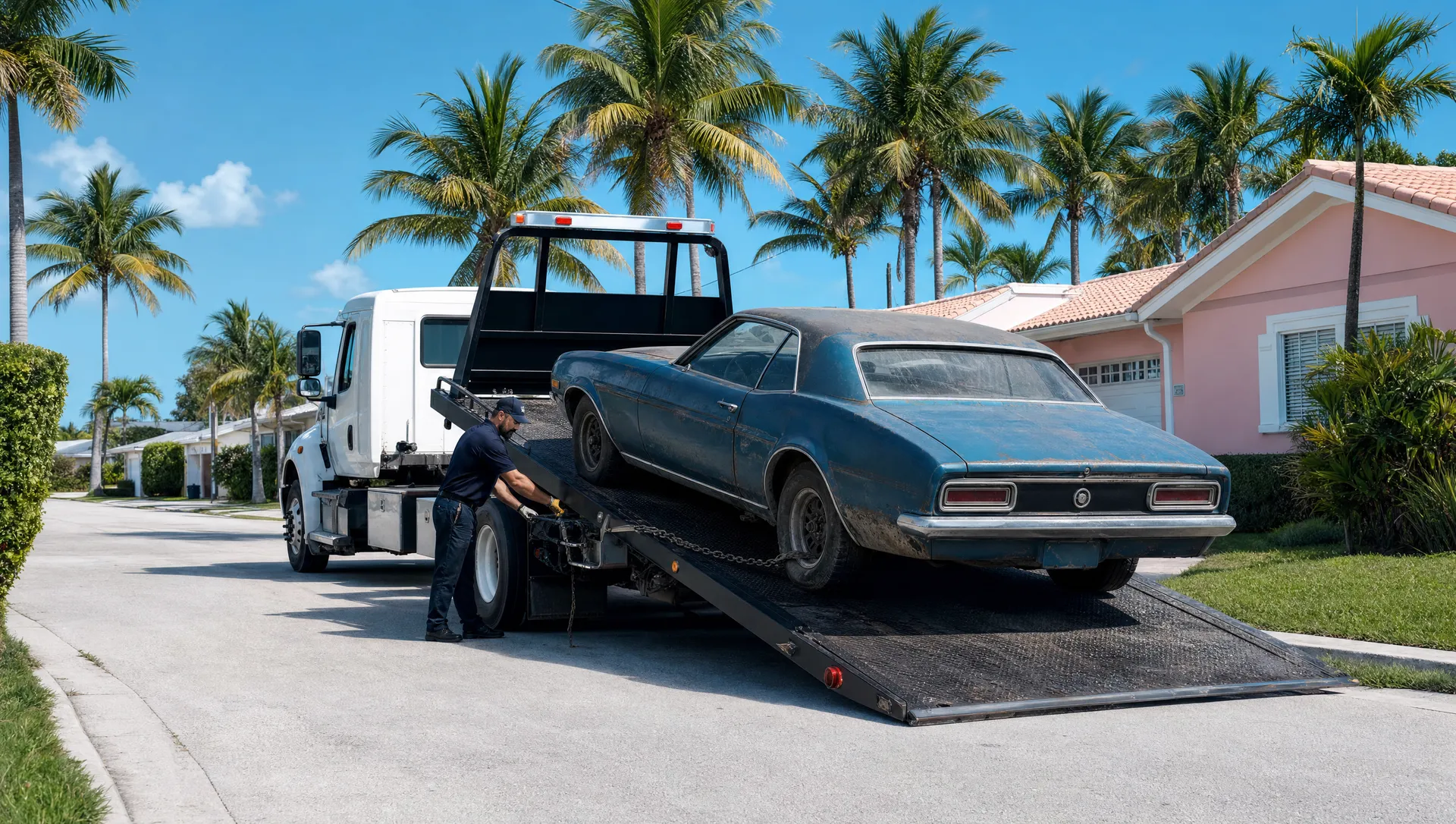
Non-running car shipping in Miami
Inoperable vehicles move through Miami every day, from salvage-auction buys to project cars that have sat out one summer too many. What matters is the specific kind of inoperable: a car that rolls, steers and brakes can be winched onto a trailer, while one that does not is a much harder shipment requiring different equipment.
Quick answer: Published benchmarks for non-running vehicles run +$100–$500 (published surcharge versus a comparable running vehicle).
Updated · sources linked below · providers set actual pricing
A non-runner, easy as 1-2-3

Tell us if it rolls, steers and brakes
Those three answers — plus keys and tire condition — decide the equipment, the price and which providers can help.

Winch-equipped providers respond
Only carriers with the right equipment quote an inoperable car, so describing the condition honestly is what gets real numbers.
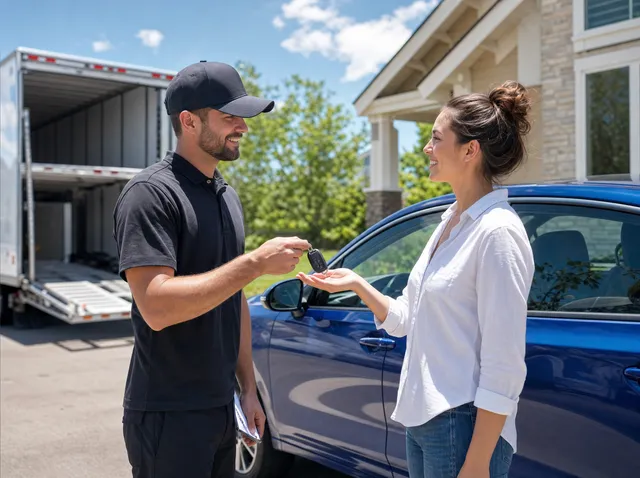
Winch load, transit, planned unload
The car is pulled aboard under control, and the delivery end is confirmed workable for a vehicle that cannot move itself.
Who it suits
Is non-running vehicles right for your shipment?

The three questions we always need: does it roll, does it steer, does it brake? Those answers decide which providers can help.
- Project cars, barn finds and long-term storage vehicles
- Salvage and total-loss purchases
- Cars with a dead battery, failed transmission or seized engine
- Estate vehicles and inherited cars that have not run in years
What actually happens
The parts people are surprised by
None of this is meant to put you off. It is the operational reality, and knowing it up front is what keeps a pickup from failing.
- 01
Three questions decide everything
Does it roll, does it steer, and does it brake? A vehicle that does all three can usually be winched onto a standard trailer. If any answer is no, the provider needs specialized equipment — often a rollback or a forklift at both ends — and the pool of providers shrinks sharply.
- 02
Winch-equipped carriers do the loading
A cable winch pulls the vehicle up the ramps under control. It takes longer than driving a car on, which is part of why the price is higher. Not every open carrier has a working winch, so this has to be specified at the request stage.
- 03
Keys matter more than people expect
Without keys, a steering lock may prevent the wheels from turning during loading, and the car may not come out of park. Say whether you have keys before pickup — it can be the difference between a successful load and a wasted trip.
- 04
Both ends need to be workable
A non-running car has to be unloaded somewhere it can stay. Confirm the delivery location can accept a vehicle that cannot be moved under its own power, and that someone will be there to receive it.
What non-running vehicles costs
Published estimates collected · published surcharge versus a comparable running vehicle
Published estimates
+$100–$500
+$100–$300
as published by Move.org (opens in a new tab)
measured in collected quotes — e.g. $978 vs $696 for the same 500-mile sedan shipment
+$100–$500
as published by uShip (opens in a new tab)
attributed to winch/liftgate equipment, extra labor and fewer available carriers
$50–$150 winch fee
as published by Compare the Carrier (opens in a new tab)
severely damaged forklift-load vehicles run 20–30% more per mile
A car that rolls, steers and brakes sits at the low end of these surcharges; missing any of the three pushes it toward the top.
These figures are estimates published by third-party transport companies, shown here for orientation with their sources and collection date. They are not quotes from Car Shipping Miami or from providers on this marketplace, and they are not binding on anyone. Independent providers set their own pricing for your specific shipment.
Pricing
What moves the price on this service
We do not publish a number here, because there isn’t an honest one. These are the variables a provider is actually pricing against.
How inoperable it is
Rolls-steers-brakes is a moderate surcharge over a running car. Missing any of those three moves the shipment into specialized-equipment territory, and the price reflects that.
Equipment availability on the route
Winch-equipped and rollback capacity is thinner than standard capacity, particularly on rural routes. That constraint often affects timing as much as price.
Loading conditions at both ends
A car on flat pavement is straightforward. A car in a soft yard, behind a fence, on a hill or with flat tires takes longer and may need extra equipment or a second person.
Missing wheels or major damage
Vehicles missing wheels, with a collapsed suspension or with structural damage cannot be secured normally. These are the hardest shipments to place and should be described in detail.
Worth knowing
The trade-offs, stated plainly
Confident, not absolute — here is where this service has real limits.
Describe the condition honestly
Underselling a problem does not make the shipment cheaper — it makes it fail. A driver who arrives expecting a rolling car and finds a seized one will not be able to load it, and a dry-run fee is a normal consequence.
Flat tires are a real obstacle
A vehicle with flat tires can be extremely difficult to winch. Inflating them beforehand, if the wheels are otherwise sound, meaningfully widens the set of providers who can take the shipment.
Leaking fluids may be refused
Actively leaking fuel or oil is a safety and liability issue on a multi-car trailer. Mention it — some providers will still take the vehicle with precautions, and others will not.
Before a provider can quote
What we will ask you for
- Whether the vehicle rolls, steers and brakes — each one separately
- Whether you have keys
- Tire condition and whether anything is missing (wheels, doors, glass)
- What the surface is like where the car is sitting
Questions about this service
How much more does it cost to ship a car that does not run?
It is always more than a running car on the same route, and how much more depends on which of roll/steer/brake still work and what equipment the provider has to bring. Get the quote with the condition described accurately — a low quote based on wrong information is not a saving.
What if the car will not come out of park?
A vehicle stuck in park cannot be winched without releasing the transmission, which usually requires keys and sometimes a shift-lock override. Tell the provider up front. Some will bring equipment for it; others will decline the shipment rather than risk damage.
Can a car with no keys be shipped?
Sometimes, but it depends on whether the steering unlocks and the transmission can be released. This narrows the provider pool considerably and typically requires a rollback rather than a standard carrier. Describe it accurately at the request stage.
Car Shipping Miami is a marketplace and advertising platform. Car Shipping Miami does not transport vehicles or provide transportation services. Transportation quotes and services are offered by independent providers. Review provider information and terms before choosing a service. How this marketplace works
Popular non-running vehicles routes from Miami
Ready to find a provider for your route?
Share the route, the vehicle and your timing. You’ll know exactly what happens next before you submit anything.
Get quotesCar Shipping Miami is a marketplace. Independent providers quote and perform the transport.